One of the criticisms often leveled at President Bush was that he governed not only in a partisan way, but in a unilateral way. Things were his way or the highway. Like the Lone Ranger, he rode alone and stuck to his convictions.
President Obama promised to change that atmosphere with his administration. He was going to govern in a bi-partisan way. He was going to bring people back together and heal the divides in the nation. He was going to be the President of everyone. And isn't that the way most people think it should be?
From the start of his presidency, and continuing more than a year later, Obama has repeatedly told Americans that a vast array of the country's problems with which he is struggling were inherited from Bush and an earlier Republican-led Congress. Doesn't pointing the finger of blame alienate those Americans who believed in the policies of Bush, and those who think he should take responsibility in the spirit of Teddy Roosevelt?
Obama traveled to Massachusetts before their special election to campaign for the Democratic nominee. He began his speech by mocking the Republican candidate about driving a truck. Don't such comments alienate Americans who drive trucks?
Much of Obama's self-assessment revolves around the need to better explain his policies to the American people. He is certain that if Americans just better understood what he is trying to do, they would agree with him. Yet throughout his first year, he has been talking to the American people to the point that anything he says now just seems like more talk. Doesn't the belief that people are not smart enough to understand what he is trying to do simply alienate the majority of Americans who don't agree with his policies?
The administration claimed that some of the biggest banks had to be rescued with taxpayer money, for the good of our economy. Now the President is calling bankers names, saying they have misbehaved, telling them they shouldn't be so successful. Doesn't that alienate Americans who are stockholders? Doesn't that also alienate the people who believed the administration in the first place, that our economy depended upon a successful banking industry?
In an Ohio town hall meeting, the President appeared without a tie, as a regular guy, telling the audience that his health care agenda is only about them, while referring repeatedly to himself. The big point he made is that he will fight for us, for health care reform, for jobs. What he left unstated is who exactly he was going to fight against, except in the case of businesses. He made it clear that if a business is successful, and the value of its stock is rising, he will fight against it, despite the contradiction that he will also fight to make the economy grow. Once again, doesn't this rhetoric alienate stockholders? And doesn't the fight itself alienate his opponents?
President Obama came to Washington to bring change to America. Instead, we find that he has been changed. He may still cling to his open-dialogue, diplomatic, coalition-building strategies with other nations and terrorists, but he has turned hard to divisive politics at home. And Americans who disagree or oppose him and his policies are the declared enemy.
Ironic that for all his denouncing of Bush, President Obama is now, just like in Afghanistan, adopting Bush strategies. He finds himself out there, standing alone. He is not bringing those of a different opinion into the process, he is fighting against them. He is not healing the wounds in America, he is infecting them. Americans are unhappy because he is, more frequently and more forthrightly, playing politics rather than acting as he promised, to be the President of everyone.
Sunday, January 24, 2010
Saturday, December 05, 2009
Nopenhagen
There is a lot of hoopla over this month's big meeting of world leaders in Copenhagen. People are being told this is the last chance we have to stop global warming. But the recent exposure of emails exchanged between scientists at the Climatic Research Unit of Britain's University of East Anglia makes it clear there is a real scientific basis for the dispute of global warming, despite claims by the White House to the contrary.
Focus on recent history misses the bigger picture. If the President and his Press Secretary look back before they were born, they will see a remarkably similar pattern of global warming. According to data from the Goddard Institute for Space Studies, temperature anomalies from around 1920 to around 1940 mimic those of the most recent two decades. Looking back even further, much of the last 10,000 years has seen a higher temperature as measured over Greenland than at our present time.

I don't dispute climate change is happening. In Alaska, I saw first-hand how much the glaciers have melted away. But the ice caps have been melting for nearly 12,000 years. Alaska used to be connected to Siberia by a 1200-mile wide land bridge, until covered by rising sea levels due to melting ice. The larger point is that humans are who we are because of climate change. And rather than the doom-and-gloom scenario some would paint for the future, William H. Calvin, professor at the University of Washington and author of A Brain For All Seasons: Human Evolution and Abrupt Climate Change, claims that temperature changes in the Quaternary period have resulted in "the longest-running rags-to-riches play in humanity's history."
Increasing evidence shows that climate change has been a significant driver of human evolution. Reports everywhere, from the Discovery Channel to the Royal Geographical Society and the National Academy of Science, have detailed how early human species evolved and spread out in response to rapid changes in the environment. Many animal species were driven to extinction by dramatic temperature swings. Humans survived primarily by becoming more intelligent and adaptable. Adaptability to those ever-changing conditions is what allowed us to survive, and to prosper.
Calvin also shows that the challenges of climate change forced humans to develop such traits as cooperation, hunting, and innovation. In a 2007 edition of Human Nature, Jessica Ash and Gordon G. Gallup, Jr. noted many of the new cultural technologies that arose to deal with the environment:
We already have a model for Copenhagen. On 11 December 1997, the Kyoto Protocol was adapted as a draft treaty, and eventually adopted by 187 nations. The legally binding agreement mandated industrialized countries reduce greenhouse gas emissions by an average of 5.2% below 1990 levels. At the time, President Bill Clinton hailed the treaty as "environmentally strong" and said that "no nation is more committed to this effort than the United States." Congress never ratified the treaty, and far from reaching the proposed goal of a 7% reduction, the United States emissions have increased by 20%. Across the globe, carbon dioxide emissions have increased to a record 31.5 billion metric tons -- 38% above levels in 1990.
Reports from UNU-IAS, the United Nations' own strategic think tank, assert that it is the private sector which will play a significant role in developing responses to climate change. Technological innovation and market diffusion aren't produced by governments. Only in a free market will business investments in areas such as nanotechnology, ocean energy, or forestry spill over to other technology producers and users. Treaties coming from meetings like those in Copenhagen and Kyoto have been proven to fail.
During the last presidential campaign, Barak Obama promised change. Does he now propose to go back on his word, and try to stop climate change? Does he want to shut down the rags-to-riches play? Does he intend to halt or even reverse evolution? Why not let us have this change that has served humans so well for so long? I think we are all better now than we were 10,000 years ago. And there is a real scientific basis for that claim.
I'm a strong believer in robust climate change.
Focus on recent history misses the bigger picture. If the President and his Press Secretary look back before they were born, they will see a remarkably similar pattern of global warming. According to data from the Goddard Institute for Space Studies, temperature anomalies from around 1920 to around 1940 mimic those of the most recent two decades. Looking back even further, much of the last 10,000 years has seen a higher temperature as measured over Greenland than at our present time.
I don't dispute climate change is happening. In Alaska, I saw first-hand how much the glaciers have melted away. But the ice caps have been melting for nearly 12,000 years. Alaska used to be connected to Siberia by a 1200-mile wide land bridge, until covered by rising sea levels due to melting ice. The larger point is that humans are who we are because of climate change. And rather than the doom-and-gloom scenario some would paint for the future, William H. Calvin, professor at the University of Washington and author of A Brain For All Seasons: Human Evolution and Abrupt Climate Change, claims that temperature changes in the Quaternary period have resulted in "the longest-running rags-to-riches play in humanity's history."
Increasing evidence shows that climate change has been a significant driver of human evolution. Reports everywhere, from the Discovery Channel to the Royal Geographical Society and the National Academy of Science, have detailed how early human species evolved and spread out in response to rapid changes in the environment. Many animal species were driven to extinction by dramatic temperature swings. Humans survived primarily by becoming more intelligent and adaptable. Adaptability to those ever-changing conditions is what allowed us to survive, and to prosper.
Calvin also shows that the challenges of climate change forced humans to develop such traits as cooperation, hunting, and innovation. In a 2007 edition of Human Nature, Jessica Ash and Gordon G. Gallup, Jr. noted many of the new cultural technologies that arose to deal with the environment:
The problems of cold weather and a scarce food supply featured detailed and progressively more refined cognitive and intellectual strategies, such as the development of cooperative hunting techniques and more sophisticated tools and weapons. Increased brain capacity also brought with it the use of fire as a means to keep warm and cook, adaptations in clothing and shelter, and the development of more refined social skills.For years, organisations such as Greenpeace have argued that developing countries face the largest challenges in adapting to climate change. With weak economies and high population densities, they are the most vulnerable and face the gravest threats. According to Maria Athena D. Ronquillo, those countries "can only hope for leadership and early action" from the industrialized world. Such thinking makes them into victims. Early man did not hope for someone else to do something about the changes in his climate. He adapted, survived, and prospered. The trouble with the proposed Copenhagen agreements is, as Sarah Palin noted, drastic measures taken by alarmist environmentalists will dramatically change our economy, but won't change the weather.
We already have a model for Copenhagen. On 11 December 1997, the Kyoto Protocol was adapted as a draft treaty, and eventually adopted by 187 nations. The legally binding agreement mandated industrialized countries reduce greenhouse gas emissions by an average of 5.2% below 1990 levels. At the time, President Bill Clinton hailed the treaty as "environmentally strong" and said that "no nation is more committed to this effort than the United States." Congress never ratified the treaty, and far from reaching the proposed goal of a 7% reduction, the United States emissions have increased by 20%. Across the globe, carbon dioxide emissions have increased to a record 31.5 billion metric tons -- 38% above levels in 1990.
Reports from UNU-IAS, the United Nations' own strategic think tank, assert that it is the private sector which will play a significant role in developing responses to climate change. Technological innovation and market diffusion aren't produced by governments. Only in a free market will business investments in areas such as nanotechnology, ocean energy, or forestry spill over to other technology producers and users. Treaties coming from meetings like those in Copenhagen and Kyoto have been proven to fail.
During the last presidential campaign, Barak Obama promised change. Does he now propose to go back on his word, and try to stop climate change? Does he want to shut down the rags-to-riches play? Does he intend to halt or even reverse evolution? Why not let us have this change that has served humans so well for so long? I think we are all better now than we were 10,000 years ago. And there is a real scientific basis for that claim.
I'm a strong believer in robust climate change.
Labels:
climate change,
copenhagen,
global warming,
kyoto
Monday, October 05, 2009
The Good Book
The digital signal on the television froze just as our favorite team scored the winning points in the final seconds of the game. The browser suffered some unexpected failure and had to shut down. We found a radio station that plays all our favorite songs, but the transmission only reaches us on cloudless nights when we hold the tip of the antenna. Equipment needs to be repaired or replaced, or becomes so outdated as to be almost useless. We couldn't help but feel frustrated. Thankfully, comfort is near at hand.
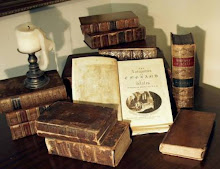
A book is both the information on the printed pages, and the mechanism that delivers the information to us. Though printing was invented by the Sumerians, and the basic codex first appeared in the third century BCE, modern technology has not improved either form or function.
The information we receive in a book doesn't come with commercial interruptions or advertisements that pop up from the pages. We can easily navigate through the book using the table of contents or the index. Even without a pricey gadget, the information is available to us on demand, always appearing quicker than even the fastest download speeds. We can start or stop reading at any time, and page backward to reread or forward to skip ahead. We can even record our thoughts in the margins and highlight the critical parts. Best of all, these functions are right at our fingertips -- no remote necessary.
A book doesn't require any installation or set-up. There is no user's manual. Batteries, electricity, and gasoline are not needed; nor is an extended warranty to protect it against mechanical breakdown. Books are completely portable, without ever having connectivity issues or reception trouble. A bookworm might eat a tiny hole through some pages, but the book will never catch a virus that causes a loss of information or performance. And if a book does lose its cover, or if a few pages come lose, the information can still be accessed and used. A reader never need take a book back to the dealer for regular maintenance, or have a serviceman come to perform repairs.
More than just a container or infotainment, books have a pleasing aesthetic that just can't be found in a radio, television, or computer. Those things have their advantages, but none can touch the soul like a good book. What will we read tonight?
A book is both the information on the printed pages, and the mechanism that delivers the information to us. Though printing was invented by the Sumerians, and the basic codex first appeared in the third century BCE, modern technology has not improved either form or function.
The information we receive in a book doesn't come with commercial interruptions or advertisements that pop up from the pages. We can easily navigate through the book using the table of contents or the index. Even without a pricey gadget, the information is available to us on demand, always appearing quicker than even the fastest download speeds. We can start or stop reading at any time, and page backward to reread or forward to skip ahead. We can even record our thoughts in the margins and highlight the critical parts. Best of all, these functions are right at our fingertips -- no remote necessary.
A book doesn't require any installation or set-up. There is no user's manual. Batteries, electricity, and gasoline are not needed; nor is an extended warranty to protect it against mechanical breakdown. Books are completely portable, without ever having connectivity issues or reception trouble. A bookworm might eat a tiny hole through some pages, but the book will never catch a virus that causes a loss of information or performance. And if a book does lose its cover, or if a few pages come lose, the information can still be accessed and used. A reader never need take a book back to the dealer for regular maintenance, or have a serviceman come to perform repairs.
More than just a container or infotainment, books have a pleasing aesthetic that just can't be found in a radio, television, or computer. Those things have their advantages, but none can touch the soul like a good book. What will we read tonight?
Labels:
books
Wednesday, September 30, 2009
Not To Worry
A fourteen-year-old Fort Worth eighth-grader died on Sunday, after she was diagnosed with swine flu, but not treated.
The Star-Telegram reports:
Is the Centers for Disease Control and Prevention -- which is one of the major operating components of President Obama's Department of Health and Human Services -- deciding what patients receive what treatment? Are they rationing medicine?
The good news is that the President and his minions assure us something like this will never happen under their government-run health insurance. That is a relief.
The Star-Telegram reports:
Lindsey went home from school Wednesday evening feeling “flushed,” Osborne said. On Thursday morning, she had a fever, and her mother, Tammy Osborne, made her stay home.When a teenager is sick with flu, it would seem that person is someone who is "most at risk" and should receive treatment, rather than withhold treatment just in case a pregnant woman or a child younger than five should later become sick.
By Friday, Lindsey was congested and feeling worse, so her parents took her to her pediatrician’s office, where she tested positive for flu.
However, she did not receive the antiviral medication Tamiflu because the doctors said the CDC guidelines recommend giving it only to people most at risk, he said.
Health officials announced this month that the antiviral medicines should be reserved for people most at risk, including pregnant women, children younger than 5 and those with certain chronic conditions like asthma and heart disease.
“They kept asking if she had asthma or diabetes,” Tom Osborne said. “They said if there is not an underlying health problem then the CDC recommends withholding it because they are so short, especially on the child doses.”
Is the Centers for Disease Control and Prevention -- which is one of the major operating components of President Obama's Department of Health and Human Services -- deciding what patients receive what treatment? Are they rationing medicine?
The good news is that the President and his minions assure us something like this will never happen under their government-run health insurance. That is a relief.
Labels:
government health insurance,
swine flu
Saturday, September 12, 2009
Let's Roll! Ordinary People, Extraordinary Courage
Marking September 11 seemed as good a reason as any to read Let's Roll! Ordinary People, Extraordinary Courage, written by Lisa Beamer. Her husband Todd was one of the passengers who fought back against the hijackers of the United Airlines flight that crashed in Pennsylvania on that terror-filled day. This book, written in 2002, is their story.
Mrs. Beamer comes across as honest and unpretentious, simply "a mom and a housewife from a small town in New Jersey." Though this is her first-hand account, much of the success of the book must go to the co-author Ken Abraham. It is structured well and presented in easily digestable chapters. Despite knowing the outcome, we wanted to keep turning the pages. We read the whole thing in just a day and a half.
The book opens with the events of September 11, 2001. The narrative then shifts to the early life of Todd Beamer. The early life of Lisa follows. Their life together leads back to the opening of the book. The rest is Mrs. Beamer's experience following the death of her husband.
Though she reveals as much as she knows about Flight 93, and the role her husband and several others played in bringing the terrorists down, there are other books that give more-detailed accounts. To our surprise, this book was rather a story of inspiration. This is an account of Mrs. Beamer's strength in dealing with the tragedy.
Thanks certainly to Mr. Abraham's guidance, this turns out to be a story of how God operates throughout Mrs. Beamer's life. She did not discover faith as a way of coping. Her faith was the foundation that helped her weather the storm. She had always found God present in her life, and by her actions, just as her husband did, she honored that presence.
Fewer than three months after Todd's death, Lisa faced his birthday without him. Even while she tried to carry on for her children, she struggled with pain and grief. Her oldest son was concerned.
Another special woman noted recently that we have to look forward to all the good things that we have right here with us and around us, not look back and think about what we might be missing. These stories teach us that life doesn't begin when we see each other, or when our debts are finally settled, or when we are home again. Life is what we make it right now.
Let's all go enjoy a piece of cake.
Mrs. Beamer comes across as honest and unpretentious, simply "a mom and a housewife from a small town in New Jersey." Though this is her first-hand account, much of the success of the book must go to the co-author Ken Abraham. It is structured well and presented in easily digestable chapters. Despite knowing the outcome, we wanted to keep turning the pages. We read the whole thing in just a day and a half.
The book opens with the events of September 11, 2001. The narrative then shifts to the early life of Todd Beamer. The early life of Lisa follows. Their life together leads back to the opening of the book. The rest is Mrs. Beamer's experience following the death of her husband.
Though she reveals as much as she knows about Flight 93, and the role her husband and several others played in bringing the terrorists down, there are other books that give more-detailed accounts. To our surprise, this book was rather a story of inspiration. This is an account of Mrs. Beamer's strength in dealing with the tragedy.
Thanks certainly to Mr. Abraham's guidance, this turns out to be a story of how God operates throughout Mrs. Beamer's life. She did not discover faith as a way of coping. Her faith was the foundation that helped her weather the storm. She had always found God present in her life, and by her actions, just as her husband did, she honored that presence.
Fewer than three months after Todd's death, Lisa faced his birthday without him. Even while she tried to carry on for her children, she struggled with pain and grief. Her oldest son was concerned.
I attempted to explain. "Mommy is sad because Daddy isn't with us on his birthday," I said, wiping the tears from my eyes.In many ways, this book is like another we read earlier in the year, Leap of Faith, by Queen Noor. They both are biographies of a sort about a deceased husband. The work of God is a strong theme in both. And though each deals with tragic events, the message of both Lisa Beamer and Queen Noor is one of hope, inspiration, and strength.
In his inimitable innocence, David looked up at me and asked, "But, Mom, we can still have cake, can't we?"
Another special woman noted recently that we have to look forward to all the good things that we have right here with us and around us, not look back and think about what we might be missing. These stories teach us that life doesn't begin when we see each other, or when our debts are finally settled, or when we are home again. Life is what we make it right now.
Let's all go enjoy a piece of cake.
Labels:
book reviews,
life,
lisa beamer,
todd beamer
Tuesday, September 08, 2009
The President Goes to School
Why are many people upset that President Obama will be addressing public school children today?
Many supporters of Obama claim that this negative reaction is personal. They note that in the past, Presidents Reagan and Bush also spoke to school children. They recall no opposition to those speeches at the time, and so believe that people are not affording Obama with fair treatment.
The answer for us is simple. We have found ourself paying more attention to political matters this year than in past years. The reason for this is that we have the distinct sense that the federal government is encroaching too far on our life, on our liberty. C.S. Lewis said, "Of all tyrannies, a tyranny sincerely exercised for the good of its victims may be the most oppressive." This is what many people fear today.
Conservative voters naturally involve themselves as little as possible in politics. Government, for them, should be in the background. When government becomes too apparent, conservatives become suspicious. We have begun to question things boldly.
We listened to the speeches of Reagan and Bush today. We read the text of Obama's speech, which can be found on the White House website. For us, the speeches all sounded remarkably similar. And we found almost nothing political, or objectionable, to Obama's speech. And we expect his presentation will outshine that of his predecessors.
Obama suggests children use their critical thinking skills. We don't believe critical thinking is something which is being taught in grade schools, but which should be. It is these skills which allow people to weigh information and make judgements about that information, rather than simply accepting and digesting. Part of the uproar over the speech is the lesson plan that was initially produced by the Department of Education, asking children to think about how they could help the President. This, unfortunately, is not critical thinking. The lesson plan has since been withdrawn from teachers, although it can still be found online.
Our only quibble with the speech is, at the end, the comment that the President is trying to get more computers and things for schools. The problem with this is that the Constitution grants no authority over education to the federal government. This is an example of how the federal government is encroaching on our lives.
Aside from that one small complaint, we think this speech from President Obama to students is appropriate. And even if one doesn't agree, if one thinks Obama ought not address their children, this strikes us as one of those teaching moments. If this speech is not appropriate, lets allow the children to hear it and then figure out what makes it inappropriate. This is what a balanced lesson plan, with a focus on critical thinking, would involve.
President Obama should get an A- today. We will continue to pay attention and be wary of government involvement in the future, as everyone should.
Many supporters of Obama claim that this negative reaction is personal. They note that in the past, Presidents Reagan and Bush also spoke to school children. They recall no opposition to those speeches at the time, and so believe that people are not affording Obama with fair treatment.
The answer for us is simple. We have found ourself paying more attention to political matters this year than in past years. The reason for this is that we have the distinct sense that the federal government is encroaching too far on our life, on our liberty. C.S. Lewis said, "Of all tyrannies, a tyranny sincerely exercised for the good of its victims may be the most oppressive." This is what many people fear today.
Conservative voters naturally involve themselves as little as possible in politics. Government, for them, should be in the background. When government becomes too apparent, conservatives become suspicious. We have begun to question things boldly.
We listened to the speeches of Reagan and Bush today. We read the text of Obama's speech, which can be found on the White House website. For us, the speeches all sounded remarkably similar. And we found almost nothing political, or objectionable, to Obama's speech. And we expect his presentation will outshine that of his predecessors.
Obama suggests children use their critical thinking skills. We don't believe critical thinking is something which is being taught in grade schools, but which should be. It is these skills which allow people to weigh information and make judgements about that information, rather than simply accepting and digesting. Part of the uproar over the speech is the lesson plan that was initially produced by the Department of Education, asking children to think about how they could help the President. This, unfortunately, is not critical thinking. The lesson plan has since been withdrawn from teachers, although it can still be found online.
Our only quibble with the speech is, at the end, the comment that the President is trying to get more computers and things for schools. The problem with this is that the Constitution grants no authority over education to the federal government. This is an example of how the federal government is encroaching on our lives.
Aside from that one small complaint, we think this speech from President Obama to students is appropriate. And even if one doesn't agree, if one thinks Obama ought not address their children, this strikes us as one of those teaching moments. If this speech is not appropriate, lets allow the children to hear it and then figure out what makes it inappropriate. This is what a balanced lesson plan, with a focus on critical thinking, would involve.
President Obama should get an A- today. We will continue to pay attention and be wary of government involvement in the future, as everyone should.
Labels:
Obama,
school speech
Friday, September 04, 2009
Sorry For the Inconvenience
After sending a private message to the Administrators of Critique Circle in response to them shutting down a thread and attacking me publicly, the website returned this message:
This user account has been closed.
Your user account no longer has access to Critique Circle. We are sorry for the inconvenience.
If you have any questions please contact support@critiquecircle.com.
This user account has been closed.
Your user account no longer has access to Critique Circle. We are sorry for the inconvenience.
If you have any questions please contact support@critiquecircle.com.
Reaction
For fun, we posted several threads on the Critique Circle forums concerning free speech and censorship, ranging from quotes from the Wizard of Oz to Milton's Areopagitica. The Moderators placed them all into a single thread, explaining that it was our intent to spam the forums. Apparently they know us better than we know ourselves.
This morning the Administrators closed that single thread, with their own reply:
As to the content — it was very sad for us to see that a member would try to hurt our other members here at CC by trying to stage a "crit strike" in retaliation for a short-term forum ban he received over a month ago when he specifically chose to ignore CC rules and requests from the CC team to stop stirring up trouble.
This is a supportive writing and critiquing site, where people should feel free to post on the forums without being attacked, and to critique as they wish—not to sacrifice credits they need or feel pressured to conform to a minority mob mentality over personal agendas. This is not a place where personal vendettas should be allowed to hurt members' chances to get feedback on their work—that goes against what CC is about.
Anyone who can't live with CC's rules and style of administration is free to leave our site. They are in fact encouraged to so at their earliest convenience, rather than keep disturbing the peace for the rest of us. Anyone wishing to leave, just let us know, and we'll close your account and refund your membership.
The thread they replied to had nothing to do with another thread they characterise as a retaliatory "crit strike". They were posted in two separate forums. We never chose to ignore rules over a month ago; we asked for clarification, in a private message as directed, and were never given any. We only knew we had violated the rules when we were told we were banned.
Now we have been banned again, this time without any notification.
Our heart goes out to the saddened Administrator.
This morning the Administrators closed that single thread, with their own reply:
As to the content — it was very sad for us to see that a member would try to hurt our other members here at CC by trying to stage a "crit strike" in retaliation for a short-term forum ban he received over a month ago when he specifically chose to ignore CC rules and requests from the CC team to stop stirring up trouble.
This is a supportive writing and critiquing site, where people should feel free to post on the forums without being attacked, and to critique as they wish—not to sacrifice credits they need or feel pressured to conform to a minority mob mentality over personal agendas. This is not a place where personal vendettas should be allowed to hurt members' chances to get feedback on their work—that goes against what CC is about.
Anyone who can't live with CC's rules and style of administration is free to leave our site. They are in fact encouraged to so at their earliest convenience, rather than keep disturbing the peace for the rest of us. Anyone wishing to leave, just let us know, and we'll close your account and refund your membership.
The thread they replied to had nothing to do with another thread they characterise as a retaliatory "crit strike". They were posted in two separate forums. We never chose to ignore rules over a month ago; we asked for clarification, in a private message as directed, and were never given any. We only knew we had violated the rules when we were told we were banned.
Now we have been banned again, this time without any notification.
Our heart goes out to the saddened Administrator.
Labels:
censorship,
critique circle,
free speech
Subscribe to:
Posts (Atom)
"There is nothing that begins so easily and takes us so far as the collecting of books." --A. Edward Newton